


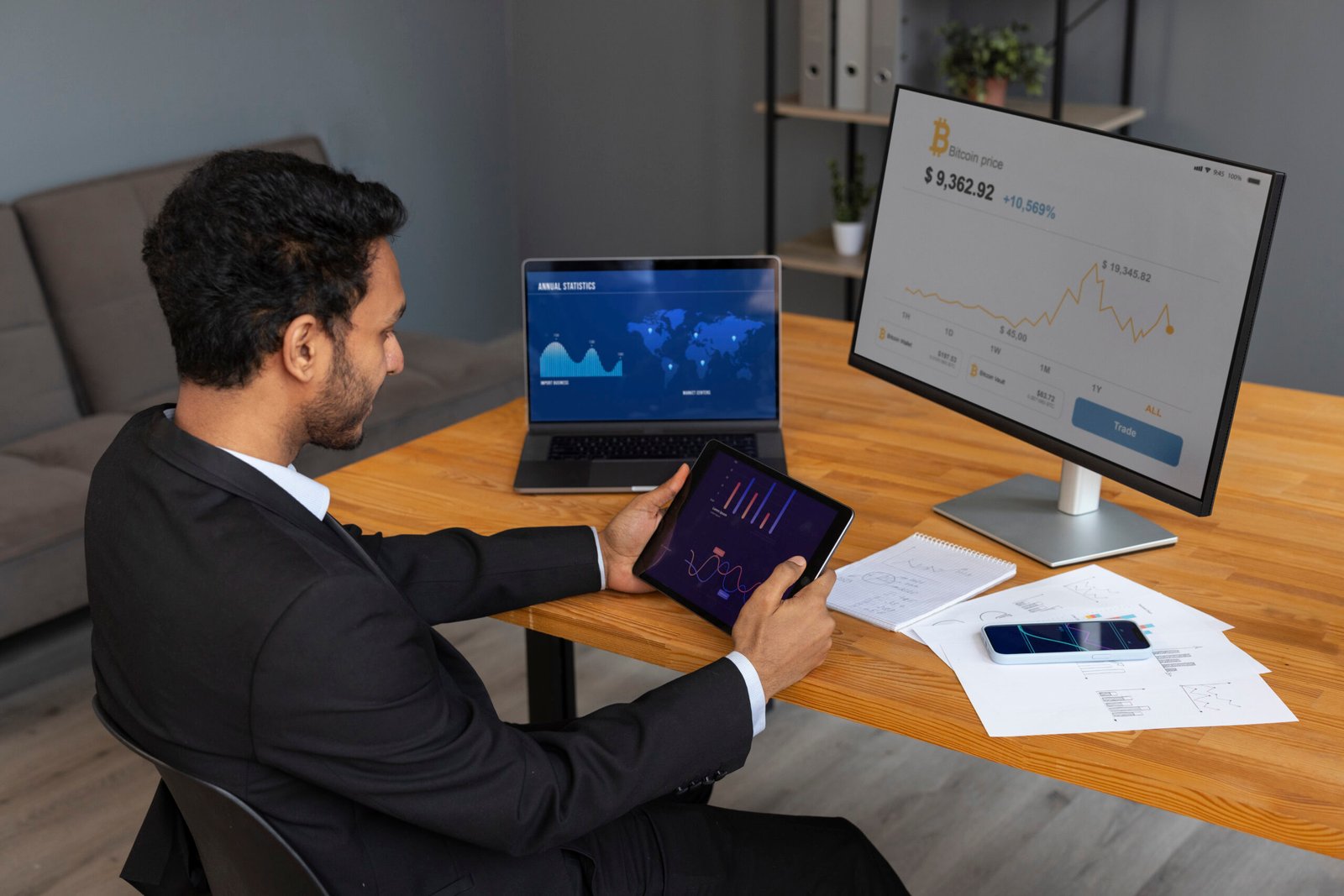
India has been very much technology-oriented in a significant way. This addresses the way traders now have access to something like a stock brokerage in the marketplace. The use of a trading account began in terminals, and today, the trading account is infused with efficient, rapid, and secure features. Voice and biometric logins in the account have become popular with the modern broker, who uses these latest and secure tools of access. This is a finer level of achieving real customer experience in the platform, making it additionally comfortable and preserving regulatory compliance as well.
Trading Account: A Guide to Trading Order Protocol
This is the gateway by which an investor makes their own standing in the trade through buying and selling orders in the recognized stock exchanges. It serves as a link between the bank account and the demat account of an individual. A purchase will, therefore, transfer funds into the exchange and credit the demat account at the end of the process. This is reversed when the security is sold, with its securities debited from the demat account, and the trading account processes the sell order. Henceforth, the trading account is at the center of executing trades with equities, derivatives, and commodities.
You need to open both a demat and trading account as a prerequisite; some demat and trading accounts interact hand in hand to finalize the trading cycle for an aspiring participant, thus.
Voice Authentication for Trading Account
Brokers have adopted voice authentication at a higher level to secure their doors safely, allowing only an authorized speaker to enter. Individual voice tones become identification proposals before direct access is granted thereafter. In one word, this is done by way of mobile applications and web applications, sometimes, besides passwords or PINs.
At setup, a statement is then saved. For an investor to gain access thereafter, the spoken verbal utterance will be congruent with the stored model of utterances. If the uttered verbalizations match, the user is granted access. This way, the system is less dependent on manual [alphanumeric] inputs, particularly on mobile devices.
Biometric Login and Market Platforms
Biometric login was another feature on trading accounts, facilitating fingerprint scans, facial recognition, among others. These biometrics pair with a smartphone, and the advances in facial recognition specifically extend the benefits of direct accessibility without a username.
From the fingerprint scan: An array of trading applications can now accommodate a device fingerprint sensor’s login for credential verification. Just drop the right fingerprint in as soon as the fingerprint is cross-checked against the biometric.
Facial recognition: Very few systems are in place that could allow the front camera of smartphones to scan the face. More of these systems, therefore, include the use of facial scanning techniques in the primary mobile authentication process.
Operational accounts equate to:
Make a Voice within the realm of what the user is authorized for, as that will be the tenet that goes with reducing the realms of embarrassment.
Impact on Inventing Access
The fact that voice and biometric logins will now open new horizons for investors in the market. There is also the assurance that account accessibility will not be bulky and cumbersome, particularly at peak trading hours, to keep intact some big operations, right from cash transfers to placement or withdrawal of orders. Introducing these functionalities on the trading apps still brings about a better and wider which accounts for the ease of further access to platforms for investors through mobile applications.
Conclusion
The trading account opens a new chapter for what the vast majority of foreign investors intend to participate in concerning India’s capital market. Voice and biometric logins are modifying the notion of security in investment as they go towards trading applications, forging new lanes for establishing authentication that loop with existing password or PIN systems. Previously, irrespective of the nature of innovation, the first step was the open demat and trading accounts; eventually, however, this will change with the advancement of such innovations in how trading accounts are accessed and controlled.