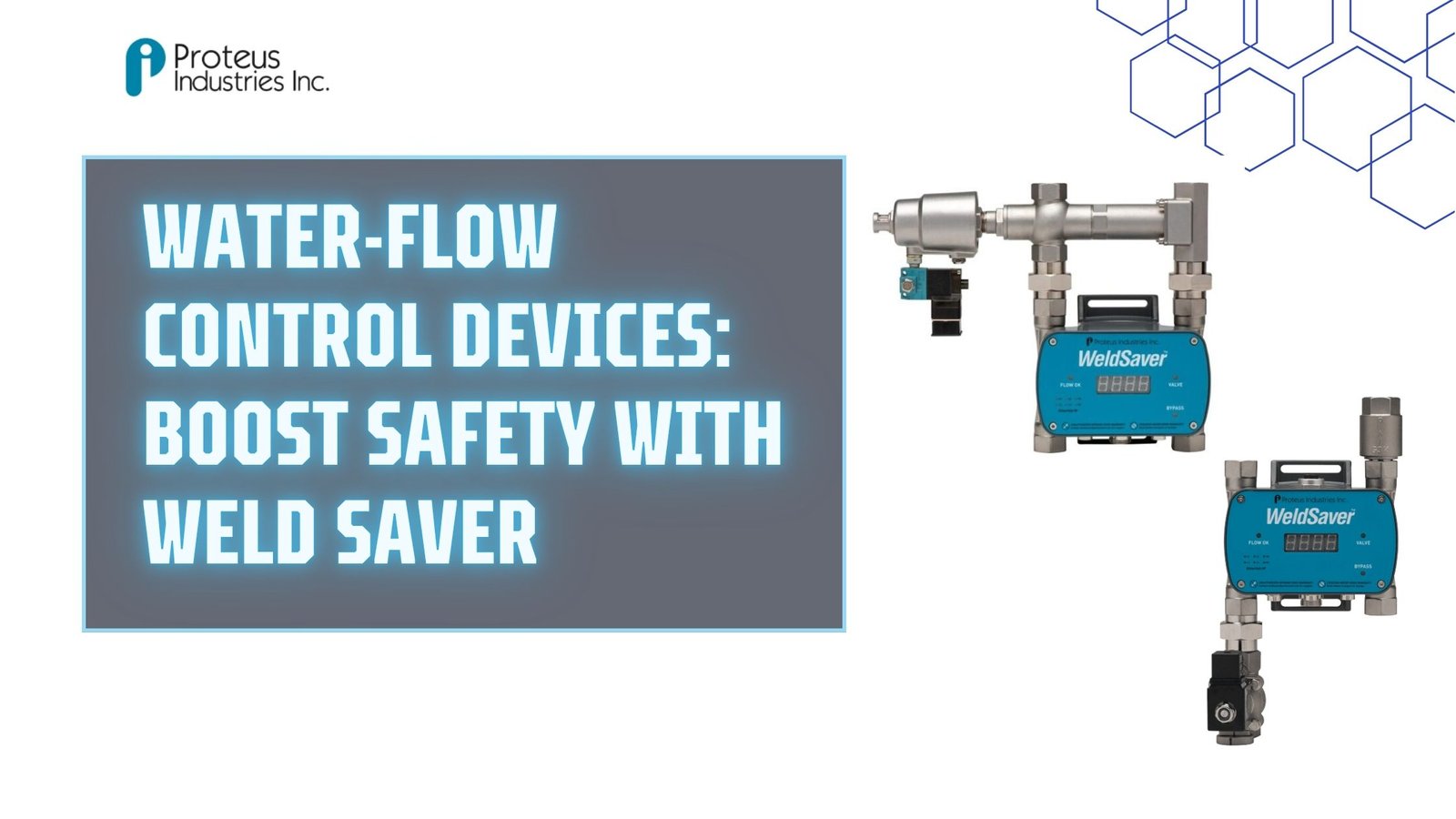


In industrial welding environments, managing coolant flow isn’t just about keeping equipment at the right temperature—it’s also about protecting your operation from costly damage, downtime, and safety risks. That’s where advanced water-flow control devices come in. Among them, the Weld Saver stands out as a leading solution that safeguards robotic welding systems by precisely monitoring and managing coolant flow.
If you’re in automotive manufacturing, heavy fabrication, or any process that relies on water-cooled robotic welding, learning how water-flow control devices like the Weld Saver work can help you reduce risks, maintain weld quality, and keep your operations running smoothly.
Why Coolant Control Is Essential in Welding
Welding produces intense heat that must be carefully managed to prevent damage to torches, cables, and even the weld itself. Most robotic and automated welding systems rely on water-cooled torches to maintain consistent temperatures.
What Are Water-Flow Control Devices?
Water-flow control devices are instruments designed to measure, regulate, and sometimes shut off the flow of coolant within an industrial process. They are commonly used in welding, die casting, and plastic molding, where precise thermal control is critical.
Typical Functions of Water-Flow Control Devices
Flow Measurement: Continuously track flow rates to ensure coolant is circulating properly.
Temperature Monitoring: Keep fluid within the ideal temperature range for your process.
Leak Detection: Identify sudden drops in flow that signal leaks or ruptures.
Automated Shutdown: Stop coolant supply instantly to protect equipment if a serious fault is detected.
While traditional systems might use simple flow meters or manual checks, modern devices like the Weld Saver integrate all these functions into a single automated unit.
Introducing the Weld Saver: A Specialized Water-Flow Control Device
The Weld Saver is an advanced water-flow control device engineered specifically for robotic welding systems. Unlike general-purpose flow sensors, the Weld Saver is tailored to the demands of water-cooled welding.
It does more than just measure flow—it also acts as a fast leak detector and emergency shutoff device, all in one. This makes it an essential component for maintaining both weld quality and plant safety.
How Does the Weld Saver Work?
The Weld Saver is installed in the coolant circuit of a robotic welding cell. It uses high-precision sensors to continuously monitor:
Coolant flow rate
Coolant temperature
If it detects a sudden drop in flow—such as from a ruptured hose, disconnected torch, or internal leak—it reacts in under half a second, triggering a protective response.
Key Protective Actions
Immediate valve shutoff: Stops coolant to prevent it from flooding sensitive robot controls or power supplies.
Alarm outputs: Sends digital signals to PLCs or robotic controllers to halt welding operations instantly.
Visual or audible alerts: Notifies operators of the fault condition for quick investigation.
By managing coolant flow and temperature this way, the Weld Saver acts as a proactive safety net.
Benefits of Using the Weld Saver for Coolant Control
Implementing the Weld Saver as your water-flow control solution brings multiple advantages beyond just flow measurement.
1. Protects Expensive Equipment
Robots, welding torches, and power supplies are costly assets. A single undetected leak can damage them beyond simple repair. The Weld Saver’s fast shutoff protects these investments, saving significant replacement or repair costs.
2. Maintains Weld Quality
Stable cooling ensures consistent arc characteristics, bead shape, and penetration. Without proper flow, overheating could lead to excessive spatter or weakened joints—resulting in rework or scrap.
3. Enhances Operator Safety
Coolant leaks on the floor create slip hazards. Worse, leaks near live welding systems raise electrical risks. By catching leaks immediately, the Weld Saver keeps the shop safer.
4. Prevents Downtime
Unplanned outages due to coolant issues can derail production schedules. With the Weld Saver, leaks are caught before they escalate, allowing quick intervention and minimizing downtime.
5. Supports Predictive Maintenance
Because it continuously monitors flow and temperature, the Weld Saver can reveal subtle shifts over time. This data helps maintenance teams spot issues like gradual clogging or weakening pumps before they fail outright.
Industries and Applications That Benefit
The Weld Saver is used across industries that depend on water-cooled welding, including:
Automotive assembly: Protects multi-robot lines in body-in-white operations.
Truck & heavy equipment manufacturing: Maintains quality and avoids costly downtime.
Tier-one suppliers: Ensures zero-defect production under strict OEM standards.
General metal fabrication: Provides flexible protection across various welding setups.
Its rugged design allows it to perform reliably even in harsh industrial environments with electrical noise, temperature swings, and constant vibration.
Conclusion
For any manufacturer that relies on robotic welding, investing in advanced water-flow control devices is essential to protect both your people and your process. The Weld Saver stands out for its ability to combine flow measurement, rapid leak detection, and automatic shutoff—keeping operations running safely and smoothly.
For companies looking to integrate this level of protection and reliability, Proteus Industries offers the Weld Saver along with extensive expertise in coolant flow management to help your facility achieve top-tier quality and uptime.